Start with job geometry
- Can the platform work directly under the task, or is there an overhang that favors a boom?
- What is the required platform height plus space for tools and materials?
- Are there doorway, elevator, or rack clearances limiting machine width and stowed height?
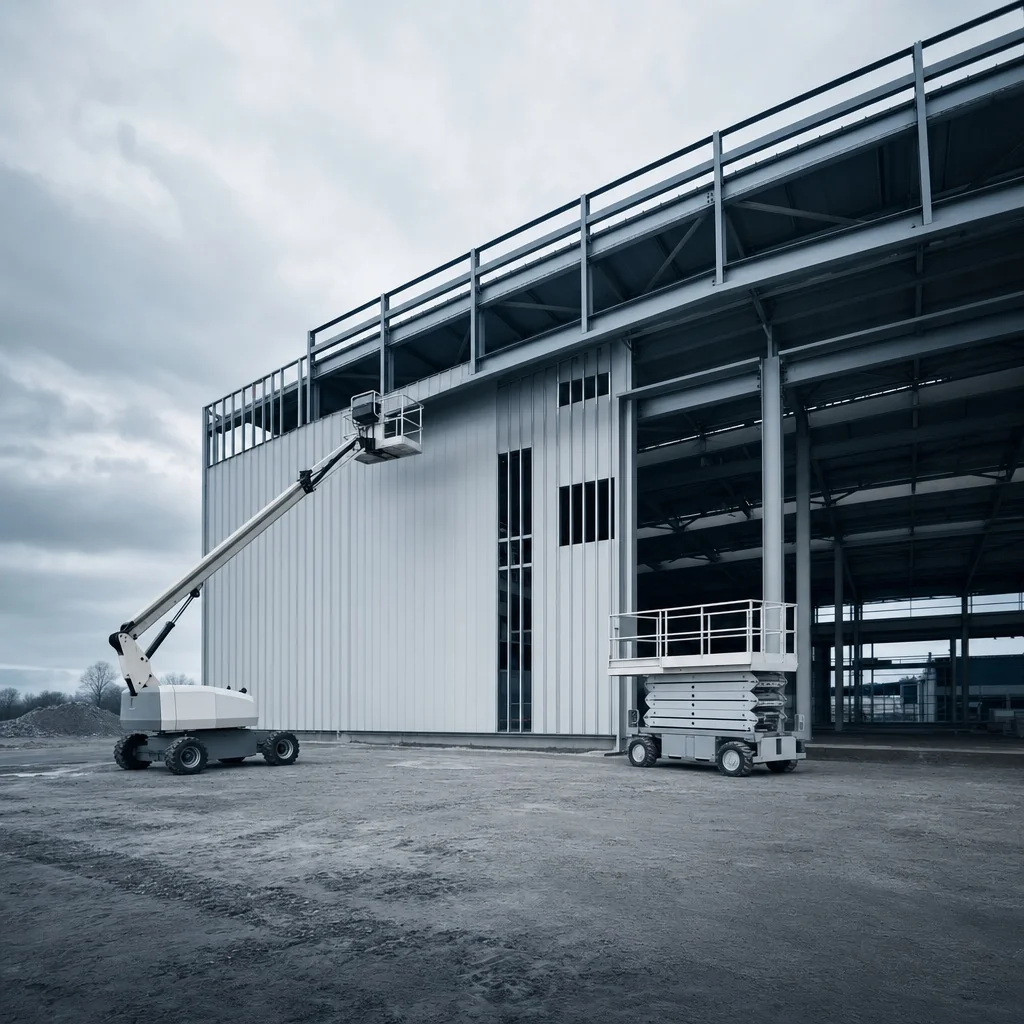
If the task is vertically overhead with clear access, a scissor lift is usually the most space‑efficient option. Overhead obstructions or set‑backs point to an articulating or telescopic boom; compare options at /aerial-lift-rental/ and /boom-lift-rental/.
How Omaha conditions affect scissor lift choice
Outdoor sites around Omaha encounter clay‑rich subgrades that hold water during spring thaw. Soft or rutted approaches favor rough‑terrain scissors with higher ground clearance and flotation. Indoors, many local distribution buildings run polished or coated floors; electric slab lifts with non‑marking tires prevent surface damage and manage ventilation limits.
Narrow the category by surface and space
- Finished interior floors: Electric slab scissors minimize emissions and marking. Common in warehouses, cold storage maintenance corridors, and retail build‑outs. See /electric-scissor-lift-rental/.
- Unfinished or variable exterior ground: Rough‑terrain scissors handle uneven grades and jobsite debris. See /rough-terrain-scissor-lift-rental/.
- Need to reach over conveyors, docks, or piping: Compare booms at /boom-lift-rental/.
Practical measurements to gather
- Working height and platform capacity requirements from the scope of work
- Minimum aisle, doorway, and turning widths along the travel path
- Floor loading limits for mezzanines or elevated slabs
- Expected ground firmness after precipitation or thaw
Related Omaha equipment decisions
Complex exterior builds may also compare telehandlers for material placement or forklifts for dock work. Explore /telehandler-rental/ and /forklift-rental/ for complementary access plans.
Keep the comparison specific
A useful equipment discussion starts with the work height, the practical machine position, the route into the area, the floor or ground along that route, and the people, tools, or material involved. Those details clarify whether vertical access, outreach, or material placement is the real constraint.