Why rough‑terrain matters locally
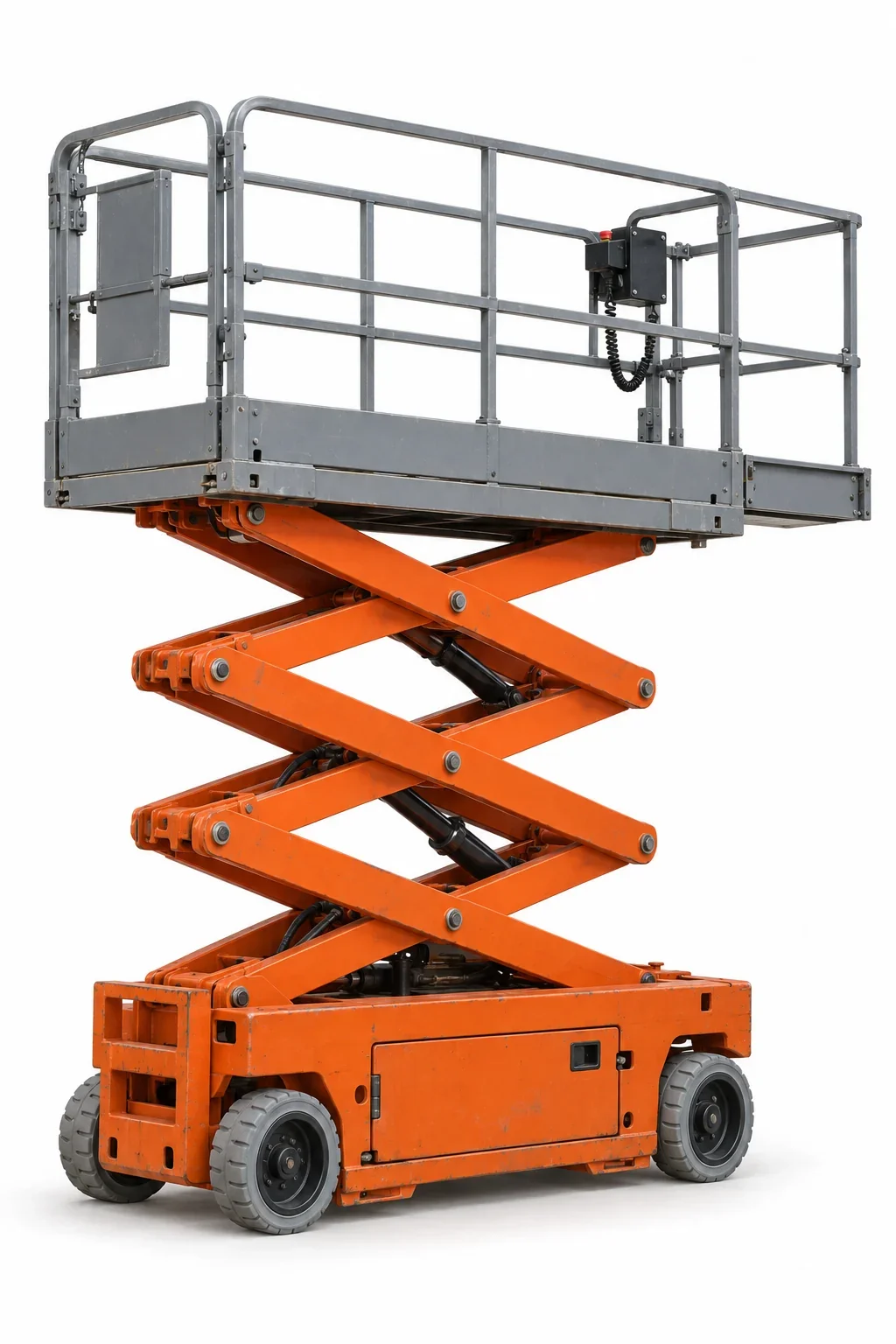
Spring thaw and post‑rain conditions around Omaha can soften subgrades, creating ruts under concentrated wheel loads. Rough‑terrain scissors distribute load better and handle debris, gravel, and grade transitions commonly found on active builds and exterior upgrades.
Key constraints to confirm
- Required platform height for steel, siding, or glazing
- Site access width between stockpiles, fencing, and utilities
- Ground firmness along the entire travel path, not only at the work face
- Approach grades at curb cuts, ramps, and temporary entrances
Scissor vs. boom outdoors
If the lift must reach over excavations, landscaping, or architectural projections, a boom’s outreach can reduce repositioning. Review options at /boom-lift-rental/ and /aerial-lift-rental/. Use a scissor when the work is mainly vertical and a broad deck helps with panel handling or repetitive fastening.
Planning for site variability
- Expect changing ground conditions after freeze‑thaw and precipitation
- Note overhead lines and façade elements that constrain deck elevation
- Coordinate staging to avoid blocking material deliveries
For material placement on rough ground, compare /telehandler-rental/ alongside the lift plan.
Keep the comparison specific
A useful equipment discussion starts with the work height, the practical machine position, the route into the area, the floor or ground along that route, and the people, tools, or material involved. Those details clarify whether vertical access, outreach, or material placement is the real constraint.