Start with the load and run window
Power needs set the frame: continuous loads for pumps, heaters, or battery charging in yard staging areas differ from intermittent lighting or tool circuits inside climate-controlled buildings. List the largest motor starts, total steady kW, and the desired run window between refuels or recharges. For light towers, note illumination coverage and any light-spill limits along neighboring operations.
How Omaha conditions change placement
- Clay-heavy soils around site perimeters soften quickly during spring thaw and wet periods. A generator or light tower with narrow tires can settle and go out of level. Plan for a high-flotation path or a firmer pad.
- Indoor corridors in local distribution buildings typically require low-emission or electric options and non-marking tires on any towable base moving across finished slabs.
- Winter cold increases starting loads and can shorten fuel and battery endurance; schedule capacity with margin.
Access route and surface
Trace the route from delivery drop to the set point: - Exterior: rutted aggregate, saturated clay, curbs, and temporary ramps may limit towable units. If the unit must sit near exterior work while crews operate aerial lifts on uneven ground, rough-terrain support equipment is common. See /rough-terrain-scissor-lift-rental/ and /telehandler-rental/ for related access. - Interior: verify door clear heights, turning radius, and floor load. Non-marking contact points help in active indoor maintenance areas.
Task positioning and coverage
- Generators: can the unit sit below and away from the task with safe cable runs, or must it be close to the load? Longer cable runs add voltage drop; size accordingly.
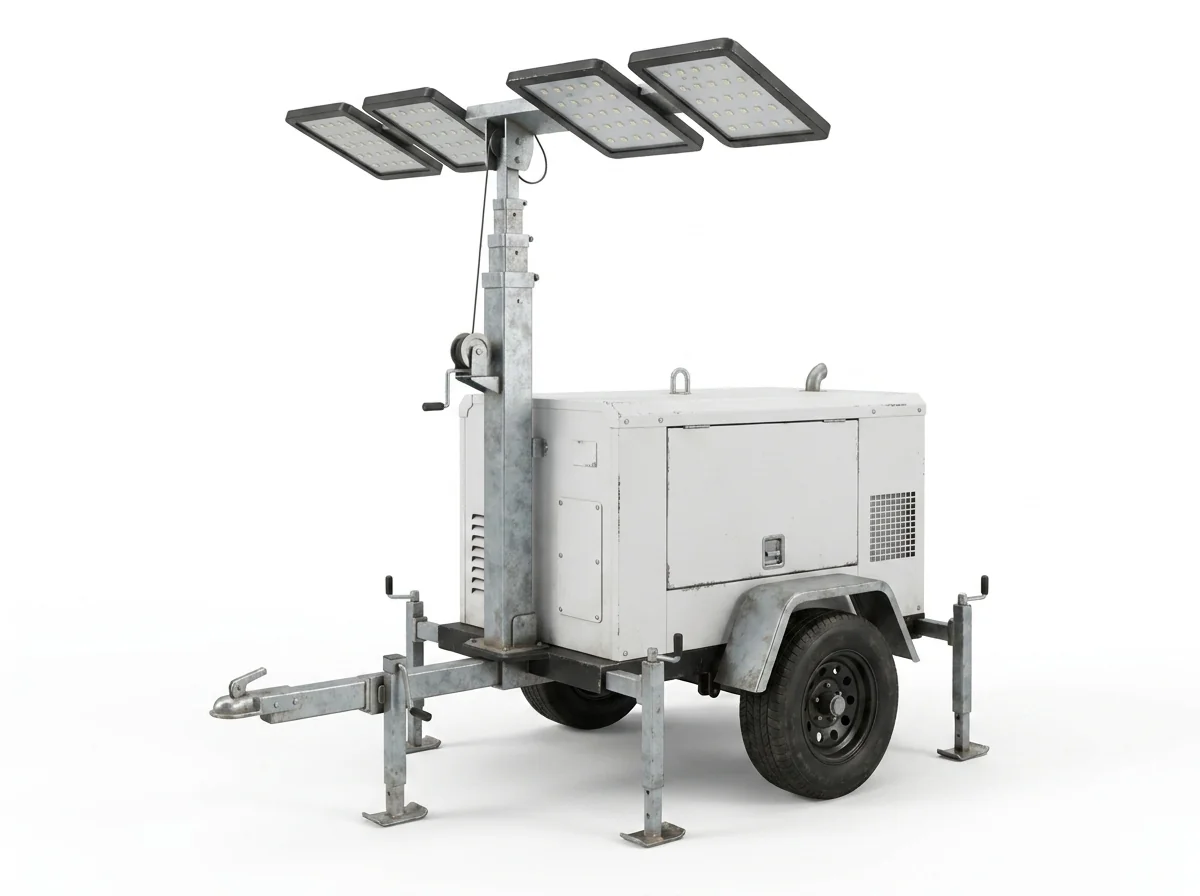
- Light towers: measure the throw needed across loading aprons, laydown yards, or temporary parking. Obstacles like stacked containers or trailers cast deep shadows that may require more masts or higher output heads.
Coordination with lift work
Night work around aerial lifts or forklifts benefits from mast placement that avoids glare into operators’ lines of sight. For indoor inventory work on finished floors, pair illumination planning with electric access equipment at /electric-scissor-lift-rental/ and /vertical-mast-lift-rental/. Outdoor staging during site build-out often overlaps with /boom-lift-rental/ needs; confirm clear swing radii around light masts.
Quick specs that narrow choices
- Required kW and surge capacity
- Desired run time and refuel window
- Emissions or noise constraints near occupied interiors
- Ground bearing conditions at the set point
- Clearance for mast raising and service access
Actual site conditions, the selected unit’s instructions, and local procedures govern exterior or elevated work around lighting masts and powered equipment.