Start with the load and the landing
- What is the maximum load weight and its center of gravity? Capacity decreases as the boom extends.
- How far back from the landing can the machine sit? Measure horizontal reach to the placement point, including any guardrail or parapet thickness.
- Is the landing interior, exterior, or through a door opening? Door width and height may limit carriage or attachment clearance.
Omaha ground and approach realities
- Clay-rich soils can rut during thaw or after sustained moisture. Yard approaches to laydown areas and staging near the structure may call for higher flotation and attention to ground bearing. Actual conditions, the selected unit’s instructions, and site procedures govern what’s acceptable.
- Many local distribution buildings rely on tight dock aprons and marked traffic lanes. Turning radius, overall length, and visibility around pedestrians and other equipment affect fit.
Boom class and geometry
- Compact units suit lighter pallets and tighter sites with frequent repositioning.
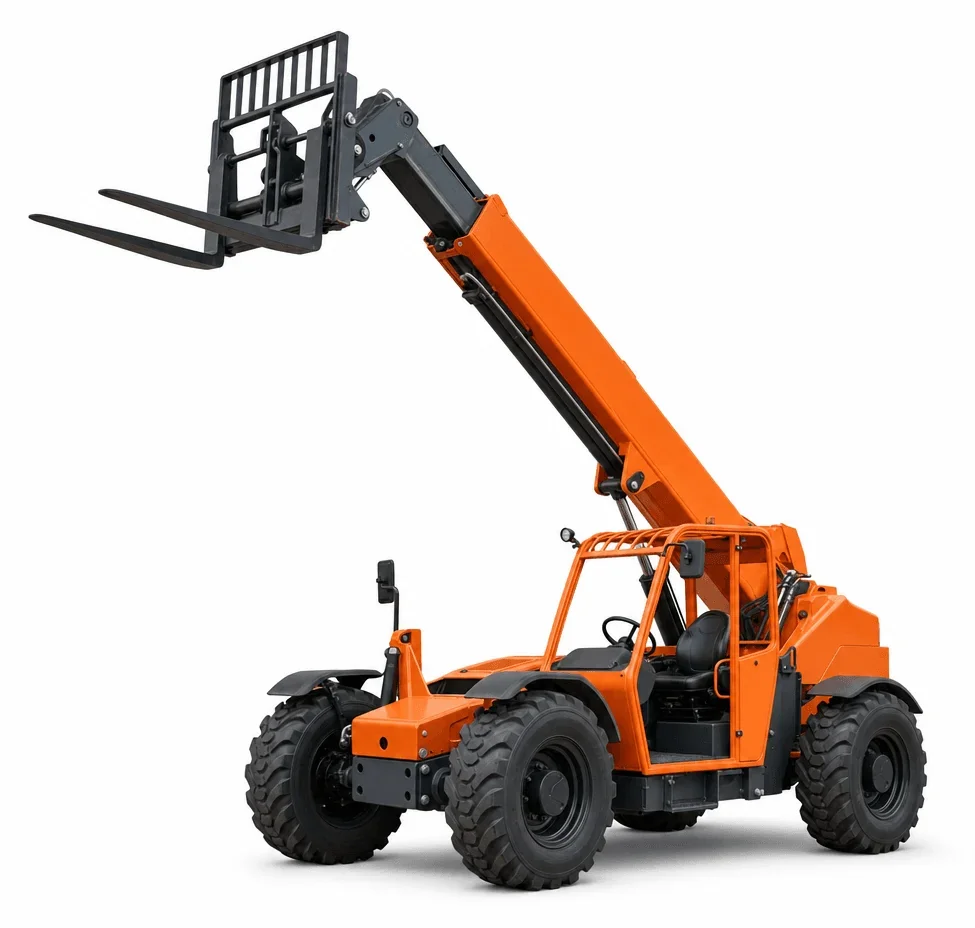
- Mid-class telehandlers balance capacity with reach for typical staging to second-story or roof edges.
- High-capacity classes address heavy mechanicals or large pallet bundles at moderate reach.
Visibility and placement control
- For mezzanine or interior drops, note eye-level visibility to the landing and whether spotters are typical under site policy.
- Sideshift and fork positioning features change accuracy at reach; verify compatibility with the load and landing constraints.
Where a forklift fits better
- Strictly slab-on-grade moves inside climate-controlled interiors often match a forklift or electric scissor for personnel tasks. Telehandlers take over when elevation and setback enter the plan.
Related categories
- Need to stage people aloft for installation instead of lifting loads? See boom lifts or articulating booms.
- Securing perimeters for active jobsites? Visit temporary fencing.
Contact
Provide load charts, pallet dimensions, and landing sketches through contact.