What shapes lift selection in Omaha
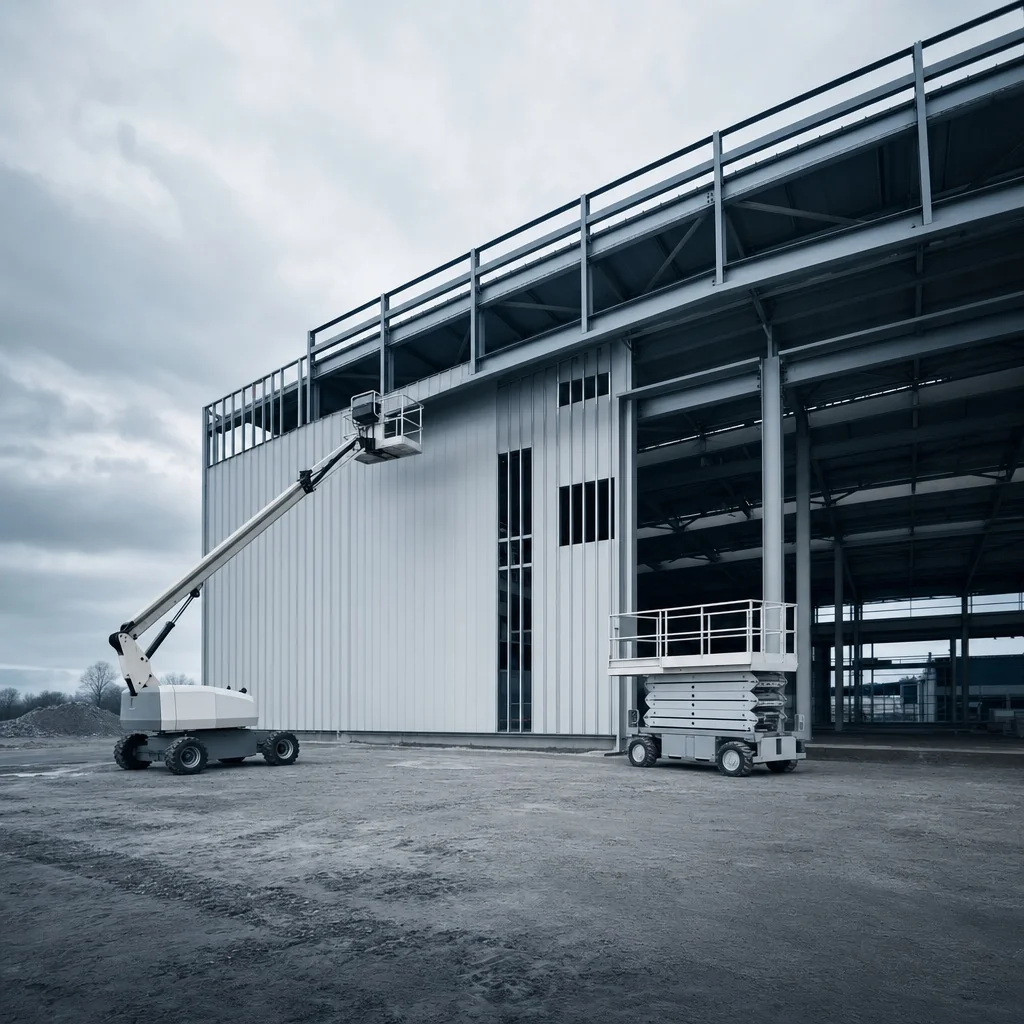
Two job settings drive most choices: outdoor construction on variable soil and indoor maintenance inside high-bay, climate-controlled facilities. Outdoor sites see spring thaw, freeze–thaw cycles, and saturated clay that can pump under point loads. Indoors, facilities expect quiet operation, low emissions, and non-marking contact with polished slabs.
- For exterior scopes, flotation, gradeability, and ground clearance matter more than platform size alone. That tends to push toward rough-terrain scissor lifts or boom lifts when reach and obstacle clearance are factors. See: /rough-terrain-scissor-lift-rental/ and /aerial-lift-rental/.
- For interior scopes, compact electric scissor lifts and vertical mast lifts minimize floor impact and aisle disruption while still covering routine service heights. See: /electric-scissor-lift-rental/ and /vertical-mast-lift-rental/.
How we structure comparisons
Each equipment page starts with the work envelope: can the machine sit below the task, or must it reach over conveyors, racking, or duct runs? Then we note floor or soil conditions, aisle width, and allowable surface contact. Finally, we use these constraints to narrow the class, drive type, tire, and platform capacity.
- Work envelope: straight-up access favors scissor lifts; offsets or obstacles often lead to articulating or telescopic booms. Explore /articulating-boom-lift-rental/ and /telescopic-boom-lift-rental/.
- Surface and space: non-marking tires and tight turning help in indoor inventory areas; wide stance and aggressive tread help outside on unsettled subgrades.
- Support gear: power and perimeter control affect uptime and site flow. See /generators-light-towers-rental/ and /temporary-fencing-barricades-rental/.
Who uses this resource
- Contractors sequencing exterior shell work before slab cure
- Facility managers scheduling lifts around shipping windows
- Maintenance teams balancing reach with floor protection in cold storage aisles
When the scope expands into material placement or palletized loads, telehandlers and forklifts round out the plan. See /telehandler-rental/ and /forklift-rental/.
Contact
Questions about fit or specifications for a local site plan can be directed to Omaha Scissor Lift Rentals at (402) 234-8289 or through /contact/.