Define the control goal first
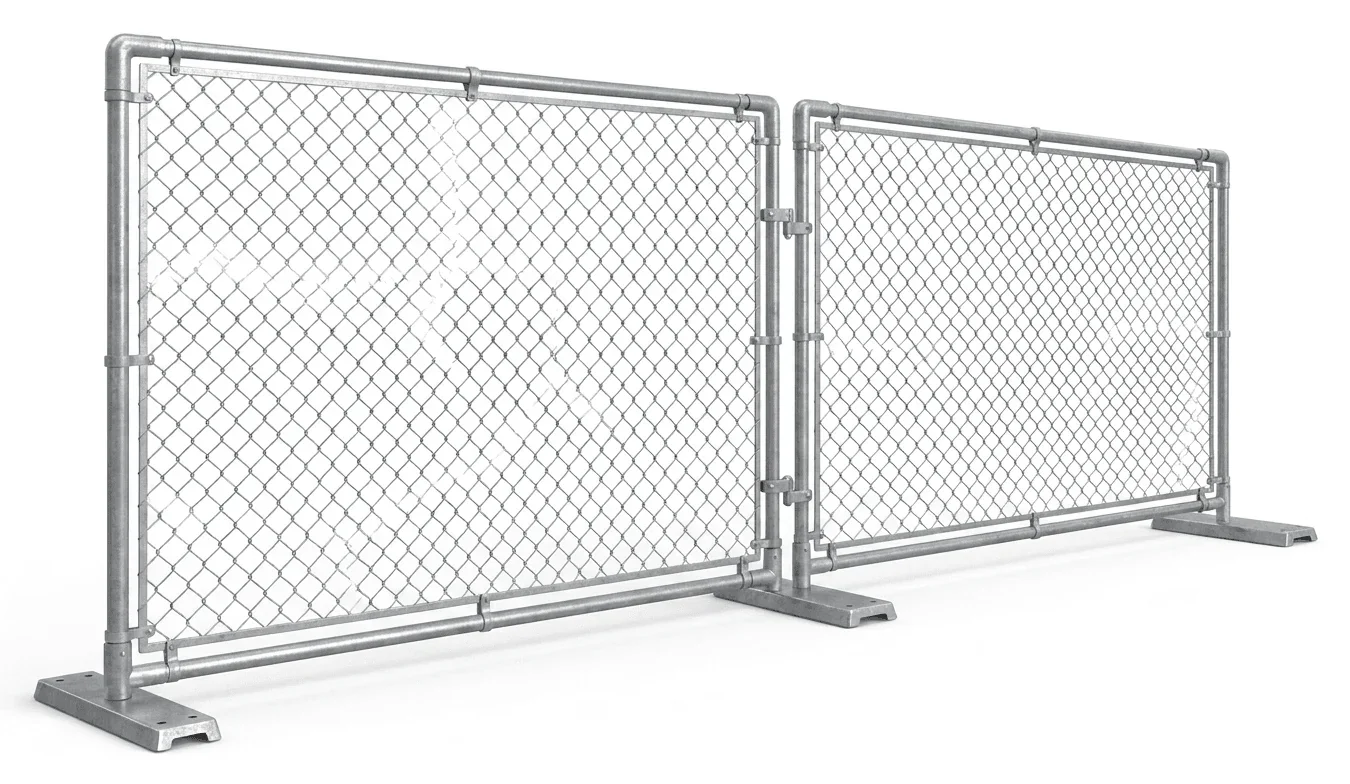
Decide whether the barrier must stop vehicles, steer pedestrians, protect inventory lanes, or divide lift traffic from ground crews. Each goal leads to different base stability, site-stability factors needs, and panel layouts.
Omaha ground and weather factors
- Clay-rich soils lose holding power in wet or thawing conditions. Freestanding bases may need larger footprints to resist tipping or settling.
- Open industrial sites can funnel strong gusts across flat pads. Taller panels need careful spacing and site-stability factors to maintain alignment.
- When fencing shifts toward interior aprons at logistics centers, non-marking feet and low-profile bases reduce floor impact and trip hazards.
Access, route, and staging
- Check delivery paths over rutted aggregate, curbs, and tight gates. A clear route reduces handling time and disturbance to finished surfaces.
- For interior pedestrian guides, map aisle widths, emergency egress, and proximity to lift aisles. Coordinate with /electric-scissor-lift-rental/ or /forklift-rental/ planning so equipment paths remain clear.
Placement near elevated work
Where aerial work occurs near the fence line or inside tall rack aisles, position barricades to create stand-off zones without intruding into lift swing or scissor platforms. For articulating or telescopic work, review clearances at /articulating-boom-lift-rental/ and /telescopic-boom-lift-rental/.
Practical constraints that narrow choices
- Panel height vs. wind exposure
- Base style for clay soils vs. polished slabs
- Visibility needs: high-contrast barricades for mixed traffic zones
- Reconfiguration frequency as the site transitions from build to operations
Exterior or elevated activity must follow actual conditions, manufacturer instructions, and site procedures when working around temporary barriers.