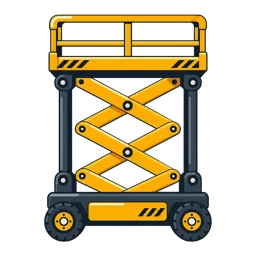
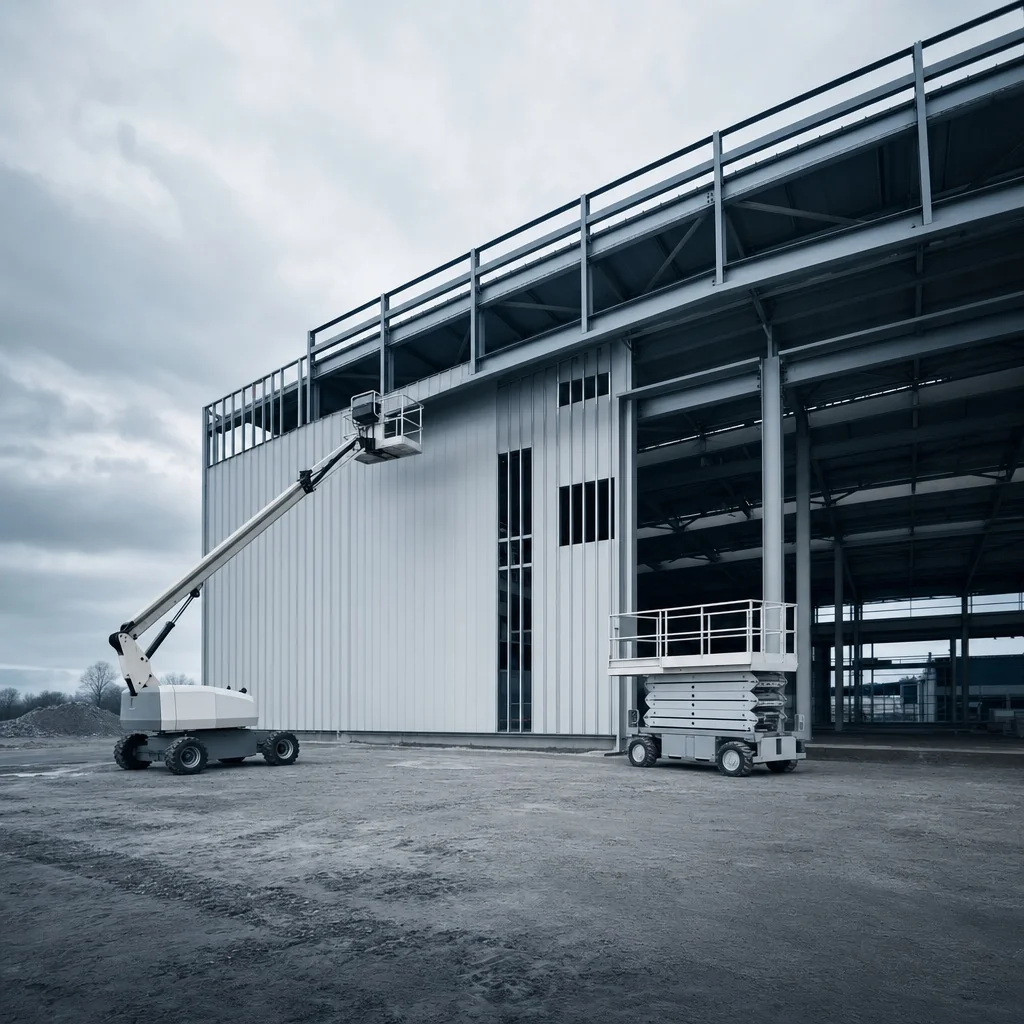
Exterior buildout vs. interior maintenance
- Rough-terrain phases: uneven grades, saturated soils, and wide-open laydown areas favor high-flotation access. See /rough-terrain-scissor-lift-rental/, /boom-lift-rental/, and /telehandler-rental/ for outdoor reach and material handling.
- Interior operations: smooth, finished slabs and continuous work at height in racked aisles call for compact, low-emission units. See /electric-scissor-lift-rental/, /vertical-mast-lift-rental/, and /aerial-lift-rental/ for slab work.
Decision points that narrow the choice
- Task geometry: can the machine sit below the task, or does it need up-and-over reach? Straight approaches point toward /telescopic-boom-lift-rental/, while obstacles can make /articulating-boom-lift-rental/ more practical. Repetitive vertical work on flat floors often fits /electric-scissor-lift-rental/.
- Surface and soil: clay-rich sites during thaw benefit from rough-terrain scissor or boom platforms with higher flotation. Finished interiors need non-marking tires and compact footprints.
- Access route: door clear heights, slab capacities, curbs, and temporary ramps can be the real limiters. Measure turning paths and ceiling obstructions before committing to size.
- Load and duty cycle: platform load, outreach, and daily run time vary widely between outdoor construction and indoor maintenance. Align capacity with the heaviest regular task rather than rare extremes.
Site products that support lift work
- Power and lighting: /generators-light-towers-rental/ covers staging on soft yards and illumination for night work.
- Perimeter and pedestrian flow: /temporary-fencing-barricades-rental/ helps separate ground crews from equipment paths as sites transition to active facilities.
- Storage and staging: /storage-containers-rental/ discusses pad prep and door alignment for tool and parts access near the work face.
Omaha-specific considerations
- Seasonal temperature swings affect battery endurance and engine performance. Build schedule buffers around cold starts and lower duty cycles.
- The growth of large, climate-controlled logistics centers creates steady demand for quiet, clean slab units with tight turning radii and reliable indoor maneuvering.
Exterior or elevated work depends on actual conditions, the selected unit’s instructions, and site procedures. For questions about category fit, see /about/ or /contact/.